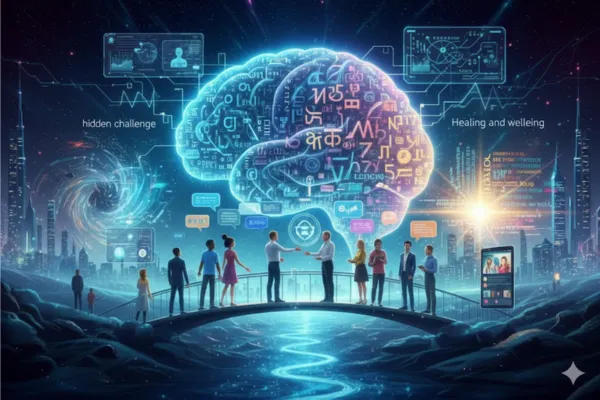
Why Your Words Matter: Breaking Mental Health Barriers for Multilingual Communities
Why Your Words MatterBreaking Down Mental Health Barriers for Multilingual Communities

Exploring the critical role of language access in fostering universal mental well-being and dismantling pervasive barriers.
Introduction
Mental well-being is a universal human right, transcending geographical and cultural boundaries.
Language access is identified as a critical barrier to achieving this right for millions.
Language access in mental health is presented not as an add-on, but as essential for healing and well-being, differentiating between being "seen" and "invisible," and finding "solace" versus remaining "isolated."
The Big Picture: What Exactly Is Mental Health?
Definition & Spectrum
Mental health is described as the intricate tapestry of thoughts, emotions, behaviors, and coping mechanisms used to navigate life.
It encompasses a wide range, from daily anxiety to profound depression, and conditions like bipolar disorder, schizophrenia, and post-traumatic stress disorder (PTSD).
Determinants & Ramifications
Influenced by a confluence of genetic predispositions, life experiences (including trauma and socioeconomic hardship), and the presence or absence of robust social support networks.
Ramifications of unaddressed struggles extend beyond the individual to family fractures, workplace dysfunction, and societal costs of lost potential and unrealized contributions.
The Pervasive Stigma
Pervasive stigma surrounding mental illness discourages open conversation and seeking help, making it even harder for individuals to access the support they need.
A Look Back: How Did We Get Here?
"Silent Era"
Early mental healthcare systems were not designed for diversity, effectively silencing those who did not speak the dominant language.
1960s - Civil Rights Act of 1964
Prohibited national origin discrimination in federally funded programs, subtly laying groundwork for recognizing language barriers as inequity.
1980s - "Culture Club"
Emergence of "cultural competence" as a key concept, acknowledging the link between language and culture, and the need for culturally sensitive healthcare. Increased recognition with growing immigrant populations.
21st Century
Legislative efforts, including Presidential executive orders and the Affordable Care Act (ACA), began mandating language assistance. Shift away from relying on unqualified interpreters towards skilled and culturally sensitive ones. Vocabulary shift towards "person-centered" and "recovery-oriented" language, emphasizing respect, dignity, autonomy, and agency.
The Current Reality: Where We Stand Today
Universal Consensus, Persistent Barriers
Near-universal agreement that language should not be a barrier to mental healthcare, recognized as a fundamental human right. Despite consensus, millions face language-related impediments to timely, effective, and culturally appropriate mental health services.
Consequences of "Lost in Translation"
Misunderstood symptoms.
Missed crucial details during assessments.
Alarmingly common misdiagnoses.
Difficulty in establishing trust and understanding a patient's inner world.
Study Findings & Trust Erosion
Spanish-speaking individuals often face systemic barriers like being turned away or experiencing longer wait times. These experiences can feel like discrimination, eroding trust.
The Interpreter Gap
The need for professional, certified interpreters with specialized training in mental health terminology and ethics is critical.
Cultural Stigma
Pervasive cultural stigma exacerbates difficulties in seeking help, especially when culturally sensitive care is lacking. Fear of judgment, shame, or social ostracism acts as a deterrent.
Potential Benefit of Second Language
Some research suggests discussing mental health in a second language can reduce stigma by creating emotional distance and allowing for exploration of difficult emotions with detachment.
The Elephant in the Room: Lingering Controversies and Debates
"Family Interpreter" Trap:Problematic reliance on family members or untrained staff for interpretation, raising concerns about confidentiality, accuracy, and emotional burden on the interpreter.
Gap Between Mandates and Reality:Legal guarantees of language access often fall short in practice, with patients still denied care. Need for greater enforcement and accountability.
Therapist Skepticism:Some therapists believe "therapy won't work with an interpreter," a view experts dispute, asserting skilled language partners can facilitate meaningful progress.
Funding and Resource Allocation:Ongoing debate about who bears the financial responsibility for essential language access services (bilingual staff, interpreters, translated materials).
Definition of "Culturally Appropriate" Care:Subject to ongoing discussion, extending beyond translation to deep understanding of cultural beliefs about mental illness, family dynamics, and traditional healing practices. Requires ongoing education, self-reflection, and adaptive approaches.
Looking Ahead: The Future of Mental Health Language Access
Technology's Role
AI-powered tools for instant support, coping strategies, and early intervention in native languages.
Wearable devices to monitor stress, sleep, and emotional states, potentially flagging language patterns indicative of mental health concerns for proactive intervention.
Telehealth Expansion
Platforms with multi-language interfaces, captioning, and remote interpreter services to connect individuals with care regardless of location or linguistic background.
Culturally Affirmative Care
Embedding cultural understanding and respect in the design of AI tools and digital platforms.
Policy Developments
Anticipated policies like the Mental Health Workforce and Language Access Act to increase bilingual providers and ensure digital platform accessibility.
Ideal Future Scenario ("Dream Team")
Professional Interpreters:Certified, specialized mental health interpreters (in-person, phone, video) as the gold standard.
Diverse Workforce:Active recruitment and training of bilingual mental health professionals reflecting community diversity.
Community Connections:Building trust through outreach programs and partnerships with local organizations serving diverse populations.
Effective Technology:Development of truly accessible digital platforms with multi-language tech support, moving beyond basic translation.
Conclusion
Language access is fundamental to effective and equitable mental healthcare and a human right.
The collective goal is to build a mental health system where everyone, regardless of linguistic background, can "speak their truth and be fully heard."
This is presented as a moral imperative to create a society where mental health support is truly accessible, fostering healing, resilience, and well-being for all.
