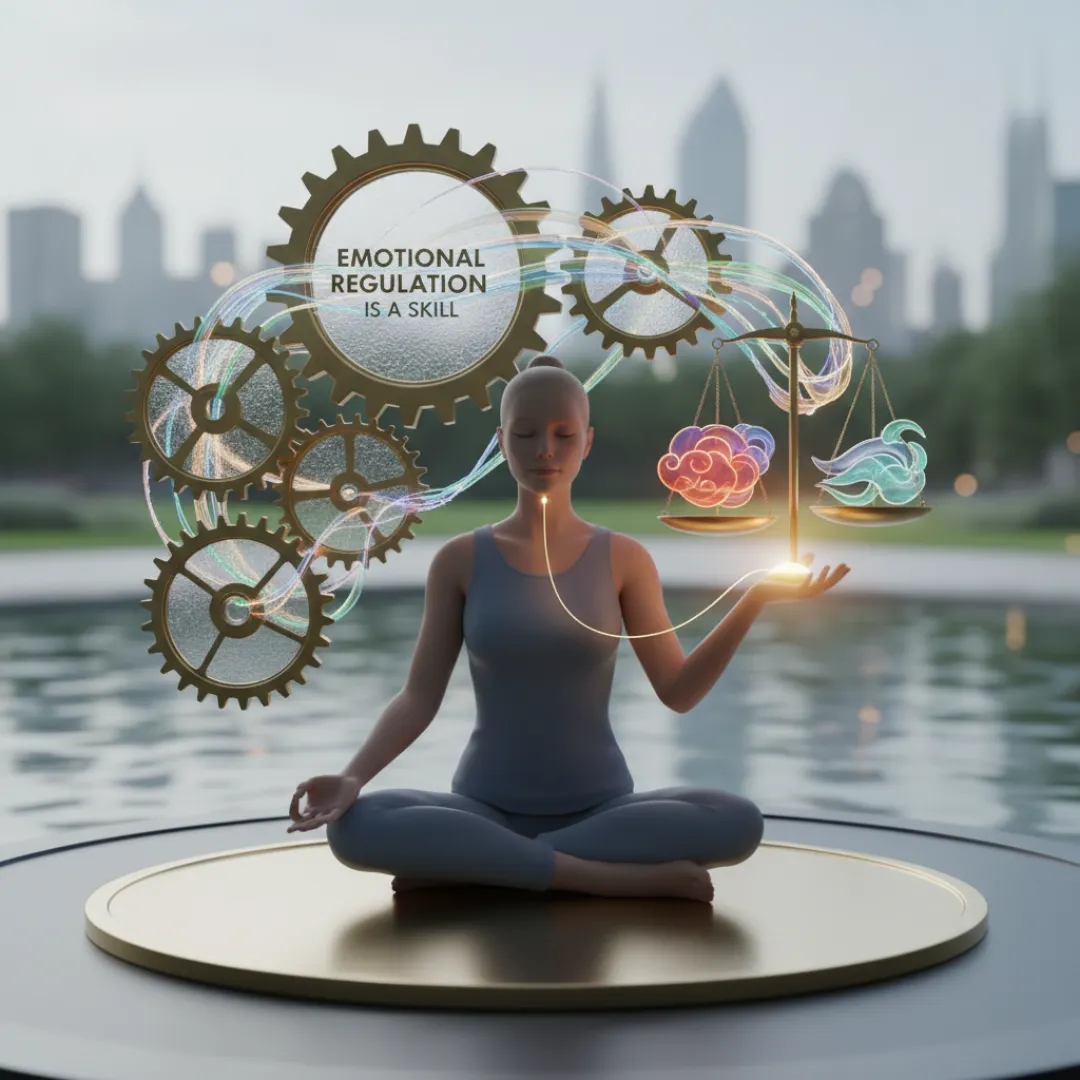
The Myth of Willpower: Emotional Regulation as a Learned Skill
The Myth of Willpower:Emotional Regulation as a Learned Skill

Emotional regulation is presented not as an innate "willpower muscle" but as a learnable skill, comparable to learning to ride a bike, involving continuous learning and adjustment.
Evolution of Understanding Emotions
Ancient Wisdom:Philosophers like Aristotle emphasized emotional balance and moderation, the "golden mean," as crucial for a well-lived life, advocating for skillful navigation rather than suppression.
Body-Emotion Link (Late 1800s):Pioneers like William James and Carl Lange highlighted the integral connection between physical sensations and emotional experiences, suggesting emotions are not solely mental.
Cognitive Revolution (Mid-20th Century):This era emphasized the role of thoughts in shaping emotions, leading to therapies like Cognitive Behavioral Therapy (CBT), which demonstrated how altering thought patterns can change emotional landscapes through reframing and challenging internal narratives.
Neuroscience (Present):Brain imaging techniques reveal the collaboration between the prefrontal cortex (thinking center) and the amygdala (alarm center) in modulating emotional responses, showcasing the brain's plasticity.
Defining Emotional Regulation
Emotional regulation is defined as the ability to influencewhatemotions are experienced,when, andhowthey are expressed. It is about steering one's emotional state rather than being overwhelmed by it. It is explicitlynotabout becoming emotionless or suppressing feelings, but about responding wisely and choosing actions within a space between stimulus and response.
James Gross's Process Model of Emotional Regulation:
This framework outlines five points of intervention:
Situation Selection:Choosing to engage with or avoid specific situations based on their emotional impact.
Situation Modification:Actively changing a situation to align with emotional goals.
Attentional Deployment:Directing attention away from emotionally provocative stimuli.
Cognitive Change:Reframing interpretations of situations to alter their emotional impact.
Response Modulation:Modifying an emotional response after it has been triggered (e.g., deep breathing).
Willpower vs. Emotional Regulation
Willpower
Described as a stern "No!" to immediate temptations for long-term goals. It's a conscious, effortful, and finite resource prone to depletion ("ego depletion").
Emotional Regulation
Characterized as a zen master guiding internal experience with equanimity. It involves tolerating discomfort and navigating feelings, cultivating resilience.
Connection:Emotional regulation supports willpower by reducing internal chaos, making it easier to resist temptation and adhere to goals. Sustainable change requires both.
Learning Emotional Regulation
Emotional regulation is a skill developed over time through experience and relationships.
Lifespan Development:It evolves from infancy (e.g., toddler tantrums) through adulthood.
Role of Caregivers:Parents and caregivers model and "co-regulate" emotions, providing support.
Brain Development:Repeated practice strengthens neural pathways in the prefrontal cortex, enhancing efficiency through neuroplasticity.
Learnable Techniques:
Mindfulness:Present moment awareness without judgment.
Cognitive Reappraisal:Changing interpretations to alter emotional impact.
Therapies:Dialectical Behavior Therapy (DBT), Acceptance and Commitment Therapy (ACT) are evidence-based.
Self-awareness:Identifying and naming emotions is the first step.
Nuances and Debates in Emotional Regulation
Nature vs. Nurture:While learning is key, genetic predispositions and temperament can influence an individual's starting point and emotional reactivity. Brain maturation is also a factor.
Automatic vs. Conscious:Regulation can occur both unconsciously and through deliberate strategies.
Defining "Dysregulation":Debate exists on whether it's primarily a skill deficit or characterized by overwhelming, unhelpful emotional reactions.
Beyond Negativity:Regulating positive emotions (e.g., overconfidence) is also important for adaptive functioning.
"Elimination" Myth:Emotional regulation is about moderating intensity and duration, and responding skillfully, not eliminating emotions.
The Future of Emotional Regulation
The field is advancing with:
Smarter Therapies:Refinement of DBT, CBT, ERT, ACT, and MBT.
Technological Tools:Wearables, apps, VR, and smart homes for real-time monitoring and training.
Personalized Pathways:Tailoring interventions to individual needs, preferences, and cultural backgrounds.
Big Picture Integration:Connecting personal regulation with social contexts and biological factors for comprehensive interventions.
Conclusion
Emotional struggles are not a lack of willpower but a complex, learnable skill. Emotional regulation empowers individuals to navigate life's challenges with grace, resilience, and wisdom. The text encourages practice and experimentation with strategies to build this "emotional superpower."
