
Social Media and Anxiety: What’s Really Happening to Our Kids? A School Psychologist’s Perspective
Social Media and Anxiety: What’s Really Happening to Our Kids?
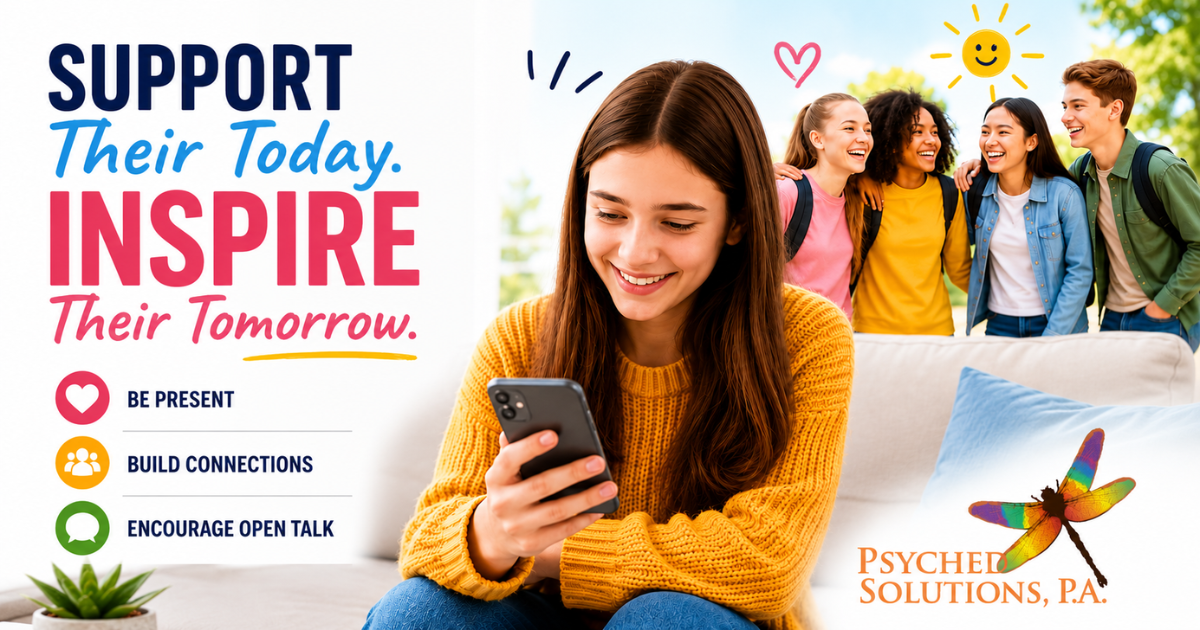
As a Licensed School Psychologist with over 25 years of experience, I have witnessed a significant shift in childhood development. Today’s children are true “digital natives,” growing up in a world where learning, identity formation, and social connection are deeply intertwined with screens and social media.
While technology offers meaningful opportunities for connection and creativity, it is also contributing to a rising pattern of anxiety, emotional dysregulation, and burnout that many parents are now observing at home, in school, and in clinical settings.
If your child seems more irritable, withdrawn, distracted, or emotionally “on edge,” despite being constantly connected, it is important to understand what may be happening beneath the surface.
The Dopamine Loop: Why Social Media Feels So Hard to Put Down
Social media platforms are designed around rapid engagement and reward-based feedback systems. For developing brains—especially children and adolescents—this creates a powerful reinforcement cycle.
Each scroll, notification, or new post delivers a small dopamine response, reinforcing the urge to continue. Over time, this can condition the brain toward seeking constant novelty and immediate stimulation.
This pattern can contribute to what many describe as:
Difficulty sustaining attention on non-digital tasks
Increased restlessness or impulsivity
Frustration with boredom or downtime
Emotional reactivity when access is limited
In children with ADHD traits or executive functioning challenges, these effects may feel even more pronounced due to existing differences in attention regulation and impulse control.
The result is not simply “too much screen time,” but a shift in how the brain learns to focus, tolerate delay, and manage internal regulation.
The Comparison Trap: Pressure, Identity, and Emotional Masking
Beyond neurological stimulation, social media introduces a constant stream of comparison.
Children and adolescents are frequently exposed to curated versions of life—highlight reels of achievement, appearance, popularity, and success. This can quietly create an internal pressure to perform, even in everyday interactions.
Many young people begin to develop what can be described as a “performance identity,” where they feel they must:
Be consistently likable or entertaining
Avoid mistakes or embarrassment
Match perceived peer expectations
Over time, this can lead to emotional masking—suppressing authentic feelings or behaviors to fit in socially.
While this may look like “coping” externally, internally it often results in emotional fatigue, anxiety, and eventual burnout when the child finally feels safe enough to release those suppressed emotions at home.
Sleep and the Emotional Brain: The Biological Reset That’s Being Lost
One of the most significant yet overlooked impacts of social media use is its effect on sleep.
Late-night scrolling delays sleep onset and reduces sleep quality, which directly affects emotional regulation and cognitive functioning.
When sleep is consistently disrupted:
The brain’s stress response becomes more reactive
Emotional regulation becomes less stable
Frustration tolerance decreases
Academic and social stressors feel more overwhelming
In this state, the emotional center of the brain becomes more dominant, while the areas responsible for planning, reasoning, and impulse control become less efficient. This imbalance can make everyday challenges feel significantly more intense for a child.
The Self-Diagnosis Trend: When Online Content Blurs Clinical Reality
Social media has also made mental health content more accessible than ever. Many young people now encounter short-form videos discussing ADHD, anxiety, autism, and trauma.
While this can be validating and reduce stigma, it also creates a challenge: complex clinical conditions are often reduced to simplified or relatable traits.
This can sometimes lead to:
Self-diagnosis based on limited information
Confusion between personality traits and clinical symptoms
Misinterpretation of normal developmental behaviors
It is important to distinguish between:
Occasional traits or experiences
vs.Persistent patterns that significantly impact functioning across school, home, and social settings
Accurate understanding requires a comprehensive, developmental, and clinical lens—not just brief online content.
Supporting Children in a Digital World: Practical Foundations
Rather than removing technology entirely, the goal is to create balance, structure, and intentional use.
Key areas of focus include:
1. Prioritize Sleep as a Foundation
Protect consistent sleep routines as a non-negotiable part of emotional and cognitive health.
2. Support Healthy Digital Boundaries
Help children develop awareness around usage patterns and encourage regular breaks from stimulation-heavy platforms.
3. Reintroduce “Offline Regulation”
Encourage activities that restore the nervous system—outdoor time, physical movement, creative play, and face-to-face interaction.
4. Focus on Function, Not Labels
When concerns arise, prioritize understanding how behaviors impact daily functioning rather than relying on online comparisons or assumptions.
5. Seek Professional Evaluation When Needed
A comprehensive psychological evaluation can help clarify underlying concerns and provide a structured path forward for support.
Final Reflection
The goal is not to demonize technology, but to understand its developmental impact. When we recognize how digital environments interact with the developing brain, we can better support children with structure, clarity, and compassion.
Instead of viewing children as “difficult” or “unmotivated,” we begin to see a clearer picture of stress, overstimulation, and unmet regulatory needs.
With the right insight and support, children can learn to navigate both digital and real-world environments with resilience and balance.
Frequently Asked Questions
What is the “missing piece” in neurodivergent or emotionally struggling relationships?
Often, the missing piece is clarity—understanding how attention, emotional regulation, sensory processing, and environment interact. A comprehensive evaluation can help identify these underlying patterns and guide targeted support strategies.
How can I distinguish between personality traits and clinical concerns?
Personality traits are consistent characteristics that do not significantly impair daily functioning. Clinical concerns typically involve persistent patterns that interfere with school performance, relationships, emotional regulation, or independence across multiple settings.
What is “Time Blindness” and how does it affect children?
Time blindness refers to difficulty perceiving, estimating, or managing time effectively. Children with this challenge may struggle with transitions, underestimate how long tasks take, or frequently lose track of time, which can impact school routines, homework completion, and daily organization.
About the Author
Dr. Angela C. Brinson, Ph.D., is a Licensed School Psychologist and Holistic Wellness Consultant with extensive experience supporting children, adolescents, and families navigating ADHD, giftedness, anxiety, and emotional regulation challenges.
📍 Based in Miami, Florida
🏫 School Psychology & Holistic Student Support Services
