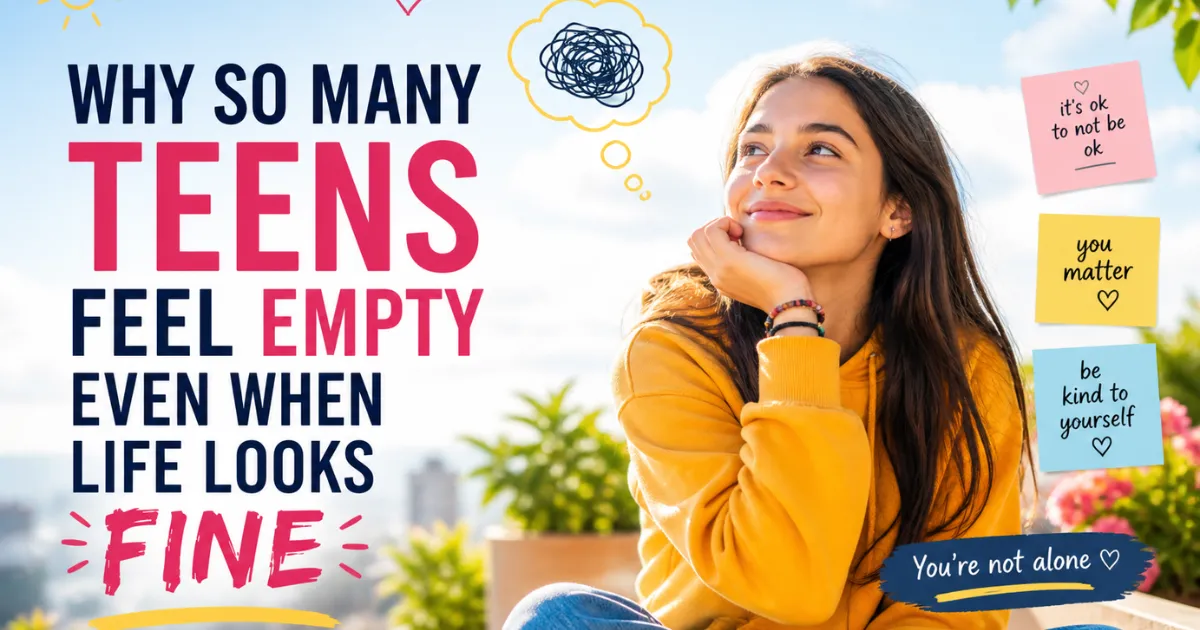
The Invisible Void: Why Teens Feel Empty Even When Life Looks “Fine”
The Invisible Void: Why Teens Feel Empty Even When Life Looks “Fine”
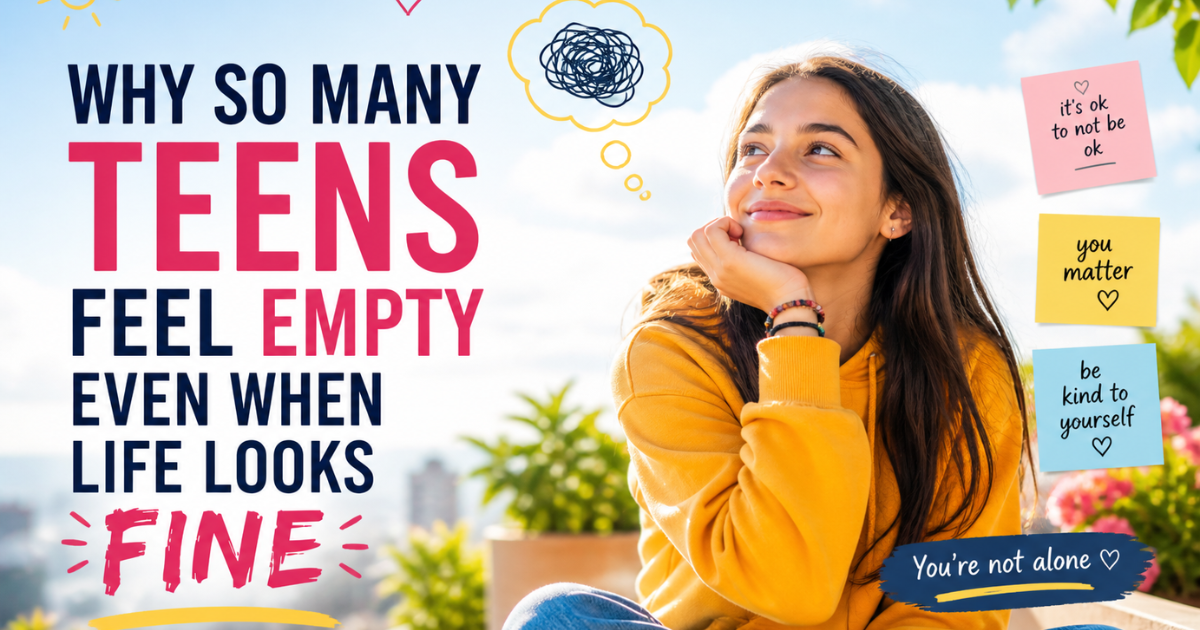
On paper, many teenagers appear to be doing everything right—earning strong grades, maintaining friendships, and staying involved in activities. Yet behind closed doors, a different story often emerges.
As a school psychologist with over 25 years of experience, I frequently hear statements like, “I should feel happy… but I don’t.” This quiet sense of emptiness is more common than many realize.
For parents watching a child succeed but lose their spark—or for teens wondering why achievements feel hollow—it’s important to understand: this is not a personal failure. It is often a sign of emotional and cognitive overload.
The Cost of the “High-Performance Mask”
Many adolescents—especially those who are neurodivergent or undiagnosed—spend much of their day masking: adjusting their behavior, suppressing natural responses, and trying to meet social expectations.
While this can help them “fit in,” it comes at a cost. Masking requires continuous emotional effort. Over time, teens may find themselves operating in a state of constant strain. By the time they reach their goals, they often have little energy left to actually enjoy them.
The Success Paradox: Achievement vs. Capacity
In today’s culture, persistence and productivity are often celebrated, sometimes at the expense of well-being. While growth requires effort, chronic overexertion leads to burnout.
When a teen’s energy is fully invested in performance—academics, activities, or expectations—there is little capacity left for restorative experiences like rest, connection, or personal interests. This imbalance creates a disconnect: life may look full on the outside, but feel empty within.
The Role of Emotional and Biological Reserves
Emotional health is not just psychological—it is biological. Adequate sleep is essential for restoring mental and emotional balance. During sleep, the brain processes experiences, regulates stress, and resets its internal systems.
When sleep is disrupted or stress becomes chronic, this balance is affected. Emotional responses become heightened, while the ability to regulate those emotions decreases. Over time, this leads to a depleted “emotional reserve,” where even small challenges feel overwhelming and daily life feels flat or gray.
Understanding the “Missing Piece”
For some teens, this sense of disconnection may stem from being misunderstood—often by themselves. Undiagnosed conditions such as ADHD or Autism can play a significant role.
Without proper understanding, teens may interpret their struggles as personal shortcomings. This can lead to self-doubt, comparison, and feelings of being “behind.” However, gaining clarity about how their mind works can be transformative. It allows them to move from simply coping to genuinely thriving.
Supporting Emotional Recovery
When a teen is emotionally depleted, traditional approaches based on rewards or discipline are rarely effective. Instead, support should focus on rebuilding capacity:
Prioritize Rest: Encourage consistent, quality sleep to restore emotional balance
Balance Effort: Help identify sustainable levels of productivity
Strengthen Connection: Focus on relationships and open communication
Seek Professional Guidance: A comprehensive evaluation can provide clarity and direction
Mental health is a fundamental part of overall well-being. When life appears “fine” but feels empty, it is a signal—not of weakness—but of a need for support, understanding, and restoration.
If your teen seems “fine” on the outside but feels disconnected within, early support can make a meaningful difference.
📞 Call (954) 257-7473
👉 Message us to schedule a consultation or comprehensive evaluation.
Dr. Angela C. Brinson, Ph.D., is a Licensed School Psychologist and Holistic Wellness Consultant based in Miami, specializing in ADHD, Autism, and adolescent emotional wellness.
