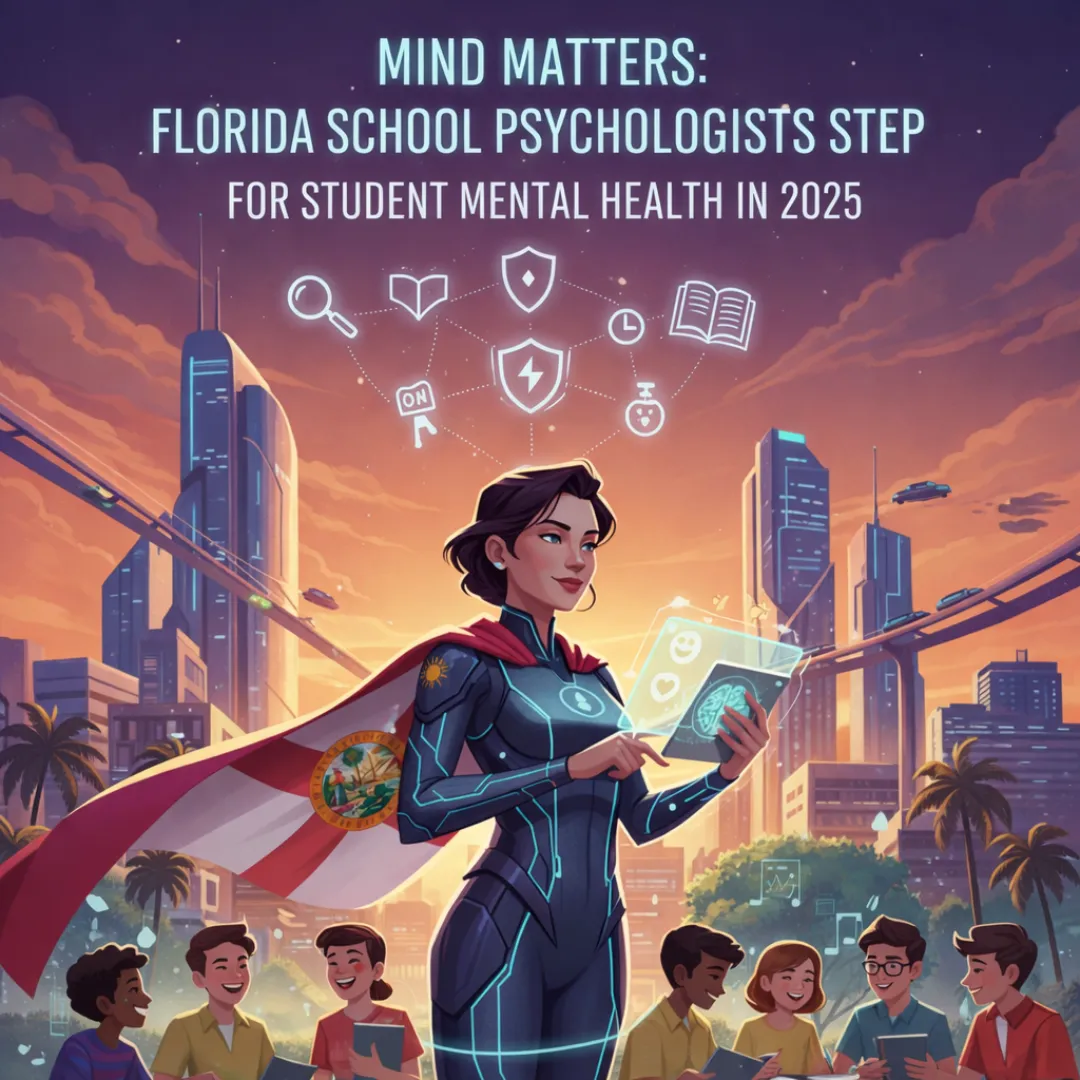
Mind Matters: How Florida School Psychologists Are Stepping Up for Student Mental Health in 2025
Mind Matters: How Florida School Psychologists Are Stepping Up for Student Mental Health in 2025

Discover the evolving and indispensable role of school psychologists in nurturing student well-being and academic success across Florida.
School bells, homework assignments, the delicate dance of friendships... and a growing undercurrent of students silently grappling with mental health challenges. In Florida, as in much of the nation, a unique cadre of professionals stands on the front lines, dedicated to helping young people navigate the complexities of emotions, learning, and overall well-being. We're talking about school psychologists. But what are Florida's school psychologistsreallydoing in 2025? It’s more than you might think.
They are, at their core, crucial figures in fostering student mental health, nurturing academic success, honing behavioral skills, and cultivating emotional intelligence. Their impact extends across a surprisingly comprehensive array of services, making them indispensable in today's educational landscape.
Who Are These Wizards of Well-being?(The Basics of Their Superpowers)
To call them mere "counselors" is to profoundly undersell their expertise. Think of them instead as holistic health experts for young minds, seamlessly integrating the often-disparate worlds of mental health and education.
So, what tools do they carry in their everyday arsenal? Imagine a…
Mind Detective
Expertly conducting assessments to pinpoint often-hidden learning disabilities, subtle behavioral issues, and burgeoning mental health concerns.
Therapy Superstar
Skillfully offering individual and group counseling, addressing everything from debilitating anxiety to difficult adjustment issues.
Team Player
Continuously consulting with teachers, engaging parents, and collaborating with community agencies to weave a robust safety net of support.
Crisis Commander
Ever ready for immediate action, from swiftly recognizing subtle signs of distress to skillfully conducting comprehensive threat and suicide risk assessments.
Program Architect & Trainer
Proactively developing prevention programs and adeptly training school staff on crucial topics like trauma-informed practices, mental health awareness, and suicide prevention strategies.
Early Bird Getter
Vigilantly spotting at-risk students early in their struggles, connecting them with vital support systems before problems escalate.
Community Connector
Expertly guiding students and their families to appropriate external mental health services when specialized care is required.
These aren't simply well-meaning volunteers. They're certified specialists, holding a specialist's degree (or higher) and completing a rigorous internship. Their credentials reflect a serious commitment to their profession.
Moreover, Florida has demonstrated a commitment to student mental health, requiring since 2019-2020, a minimum of 5 hours of mental health instruction annually for students in grades 6-12, while embracing safe spaces and telehealth initiatives.
A Look Back: From Test Givers to Trailblazers(The Journey Through Time)
The role of the school psychologist hasn't always been so multifaceted. Indeed, it's been a long and winding road.
1The OG Days (Early 20th Century)
In the beginning, before they even had a formal title, "psychological examiners" were primarily tasked with testing children for special education placement. The focus was on basic assessment, with little consideration for the broader spectrum of mental health.
2A Professional Awakening (1950s-60s)
Florida began to take the field seriously. The Florida Association of School Psychologists (FASP) was established in 1957, advocating tirelessly for proper training standards and a clearly defined role. By 1962, state certification became a reality.
3The Game Changer (1975)
The passage of the federal Education for All Handicapped Children Act fundamentally reshaped the landscape. Mandating education for all children with disabilities, this landmark legislation dramatically increased demand for school psychological services, transforming the role into that of a comprehensive interventionist.
4Modern Makeover
The role has expanded far beyond mere assessment to encompass direct support, crisis intervention, and the promotion of overall well-being. Contemporary training programs reflect this expanded scope.
The Good, The Bad, and The Undeniable(Current Realities & Rough Patches)
Why They're Gold (The High Fives):
The Perfect Blend:Their unique dual expertise in both education and mental health makes them an invaluable asset in the school setting.
Treatment That Sticks:Research indicates that students are significantly more likely to complete mental health treatment when it is readily available within the familiar and supportive environment of their school.
Creating Safe Havens:They play a crucial role in building positive school climates, conducting critical safety assessments, and identifying potential problems early on.
The Elephant in the Classroom (The Headaches & Hurdles):
The Great Shortage Crisis:Florida faces a significant shortage, falling far short of national recommendations (with a ratio of 1 school psychologist for every 2,000 students, compared to the recommended 1:500-700). Tragically, many schools lack even a single school psychologist.
Paycheck Problems & Burnout:Lower salaries compared to national averages make it challenging to attract and retain qualified professionals, contributing to burnout and high turnover rates.
Baker Act Blues:Controversies surrounding the involuntary mental health examination (Baker Act) for what some consider "normal" behavior raise serious ethical questions and highlight concerns about inadequate staff training and inconsistent application of the law.
Underutilization & Misconceptions:Some school staff members fail to fully grasp the comprehensive skills and expertise of school psychologists, often pigeonholing them into assessment roles and overlooking their potential to provide counseling and other direct services.
Stigma Still Lingers:Despite progress, some parents remain hesitant about having their children seek mental health support at school, fearing the potential for stigmatization or labeling.
Curriculum Clash:Past attempts to censor AP Psychology content (such as discussions of gender identity) sparked intense debate about the importance of providing comprehensive, evidence-based mental health education.
Trust Shakers:Although rare, incidents of criminal behavior by school psychologists underscore the need for rigorous vetting processes and ongoing professional development.
Funding Hurdles:Outdated Medicaid reimbursement policies continue to hinder schools' ability to adequately fund mental health services, limiting access for many students.
What's Next for Florida's Mental Health Mavericks?(Future Developments in 2025 & Beyond)
Despite these challenges, there is reason for optimism.
Legislative Spotlight (Bills, Bills, Bills!):
The Staffing Ratio Push:While previous attempts have faced obstacles, strong legislative interest persists in mandating improved psychologist-to-student ratios in Florida schools.
Accountability & Data:Beginning in May 2025, new legislation will require annual reporting on student mental health outcomes, ensuring that programs are evaluated for effectiveness.
Crisis Coordination:By July 2025, 988 call centers will be integrated into the state's crisis care system, providing an additional layer of support for students in distress.
On-the-Ground Innovations:
Education Everywhere:The continued implementation of mandatory mental health instruction, complemented by "Resiliency" initiatives that focus on character development and essential life skills.
Training the Troops:Youth Mental Health First Aid (YMHFA) training is now mandated for most school personnel, empowering educators and staff to recognize and respond to students in need.
More Money, More Services:State funding for school mental health services continues to increase, reaching $140 million in recent years.
Battling the Shortage Head-On:Universities like USF are launching new degree programs (Fall 2024) to address the critical shortage of school psychologists.
Tech to the Rescue:Telehealth and online counseling services are expanding, increasing access for students in rural or underserved areas.
Evolving Role:School psychologists are increasingly focusing on prevention, resilience, and emotional intelligence, shifting from a primarily reactive, crisis-response model to a proactive, preventative approach.
Grant Support:Schools are leveraging mental health grants to fund innovative programs and foster more inclusive learning environments.
The Unsung Heroes We Need More Of:A Call to Action
Florida's school psychologists are performing indispensable, complex work under immense pressure. They are, in many ways, the unsung heroes of our educational system, quietly making a profound difference in the lives of countless students.
Supporting these essential professionals with adequate funding, clearly defined roles, and increased staffing levels is not merely a good idea – it is absolutely crucial for the well-being of every student in the Sunshine State.
So, what canyoudo to advocate for stronger mental health support in your own community? The time to act is now. The well-being of Florida's children depends on it.
