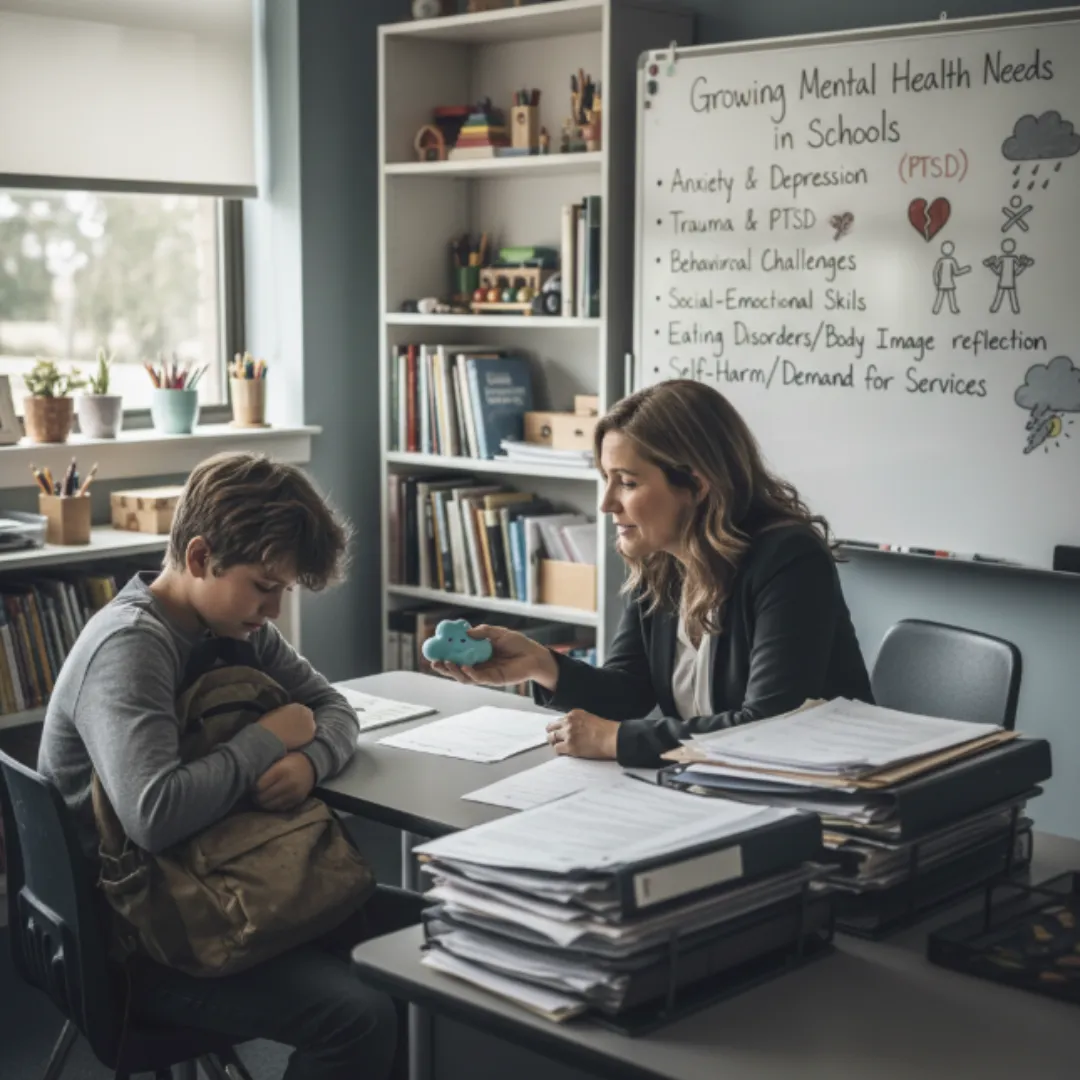
The Growing Mental Health Needs in Schools: Insights from Today’s School Psychologists
The Growing Mental Health Needs in Schools: What School Psychologists Are Seeing Today

Over the past few years, the role of the school psychologist has evolved rapidly. What was once centered primarily on assessment and eligibility has expanded into crisis response, mental health intervention, collaboration with educators, and family support. Today’s schools are facing more complex student needs than ever before—and school psychologists are often at the center of that work.
Rising Anxiety, Stress, and Emotional Regulation Challenges
One of the most significant trends school psychologists are observing is an increase in student anxiety and emotional regulation difficulties across all age groups. Academic pressure, social media exposure, family stressors, and lingering effects of disrupted learning environments have contributed to heightened emotional needs.
Students may present with:
Increased school avoidance
Difficulty focusing or completing tasks
Emotional outbursts or withdrawal
Heightened test anxiety
Early identification and supportive interventions are critical. School psychologists play a key role in helping schools move beyond discipline-based responses and toward skill-building and emotional support.
The Shift Toward Prevention and Tiered Supports
Schools are increasingly adopting Multi-Tiered Systems of Support (MTSS) to address academic, behavioral, and social-emotional needs. This shift places school psychologists in a leadership position—helping design, monitor, and refine interventions at all tiers.
Rather than waiting for students to struggle significantly, prevention-focused practices such as:
Social-emotional learning (SEL) programs
Small-group interventions
Teacher consultation and coaching
are becoming essential components of school mental health systems.
Assessment in a Changing Educational Landscape
Assessment remains a core responsibility, but expectations around testing are changing. School psychologists are being asked to balance efficiency, equity, and accuracy while navigating increased referrals and limited time.
There is also growing attention to:
Culturally responsive assessment practices
Reviewing automated or AI-generated reports for accuracy
Ensuring testing data aligns with real-world classroom functioning
Thoughtful interpretation and clear communication with families and teams are more important than ever.
Collaboration Is No Longer Optional
Today’s school psychologist is not working in isolation. Collaboration with teachers, administrators, counselors, and families is essential for meaningful student outcomes.
Effective collaboration includes:
Translating data into practical classroom strategies
Supporting teachers with behavior and engagement concerns
Helping families understand evaluation results and next steps
When school psychologists are included early in problem-solving conversations, schools are better equipped to respond proactively rather than reactively.
Supporting the Well-Being of School Psychologists
As student needs increase, so does the emotional load carried by school psychologists. Burnout and compassion fatigue are real concerns in the field.
Sustainable practice requires:
Reasonable caseloads
Clear role boundaries
Administrative support
Opportunities for professional reflection and growth
Supporting school psychologists ultimately supports students, families, and entire school communities.
Looking Ahead
The future of school psychology lies in prevention, collaboration, and adaptability. As schools continue to navigate changing student needs, school psychologists will remain essential in building supportive, inclusive, and responsive learning environments.
By staying informed, advocating for best practices, and prioritizing both student and professional well-being, school psychologists can continue to make a lasting impact—one student at a time.
