From Clutter to Clarity: How Organized Spaces Shape Focus, Creativity, and Kids’ Minds
From Chaotic Cubes to Zen Zones: How Organized Spaces(and a Little Mess!)Shape Our Minds and Our Kids' Future
Discover the surprising science behind why a tidy space can declutter your mind, and how a touch of playful chaos might just spark genius.

I. The Great Uncluttering: Why Your Brain Craves Order
That overflowing desk. The chair that has disappeared under a mountain of clothes. We all have those spots in our home that can induce anxiety just by looking at them. What if these piles of things are affecting you more than you realize?
The core idea is simple: a clutter-free space isn't just aesthetically pleasing, it's a powerhouse for your mind. Think of it as the secret ingredient to mental clarity, motivation, and even sharper minds in our children – hello, focus zones!
Let's consider "the problem with piles." Visual clutter drastically elevates stress and anxiety levels. Your brain is working overtime to ignore the mess. It's the Zeigarnik Effect in action, those unfinished tasks in plain sight draining your mental reserves. It is decision fatigue from endless choices about what to do with the mess.
However, when we move towards organization, we unleash the "Zen Zone Effect." There is more focus, less stress: A tidy space has benefits for adults, as seen in multiple studies, from boosting productivity to improving sleep quality. Organization becomes a tool that helps you get more done.
II. A Walk Through Workspace Wonders (and Woes) of the Past
The evolution of the workspace is a fascinating study in how we try to optimize our environments for productivity. Early 1900s offices were all about efficiency, not exactly comfort. Think cramped rows of desks and watchful supervisors.
Post-WWII saw the emergence of the "Office Landscape" dream: open, organic spaces to enhance communication. These efforts, while well-intentioned, often led to noise complaints and a distinct lack of privacy.
Then came the cubicle, Robert Propst's solution for individual concentration, but was it a solution or a new problem? A hero or a villain? The debate continues.
Laptops, Wi-Fi, and virtual offices shattered traditional layouts. This ushered in today's era of flexible, hybrid work environments, whether we are truly working efficiently is another question altogether.
III. Kid Chaos vs. Kid Calm: Building Brain-Boosting Bubbles
Organized spaces aren't just a grown-up concern, they're a game-changer for children's emotional well-being and sparking curiosity. A structured environment sets the stage for better behavior and cognitive development.
From family-centered lessons at the hearth to Froebel's revolutionary kindergarten ideas and Montessori's prepared environments, the evolution of children's learning spaces reflects an understanding of their developmental needs.
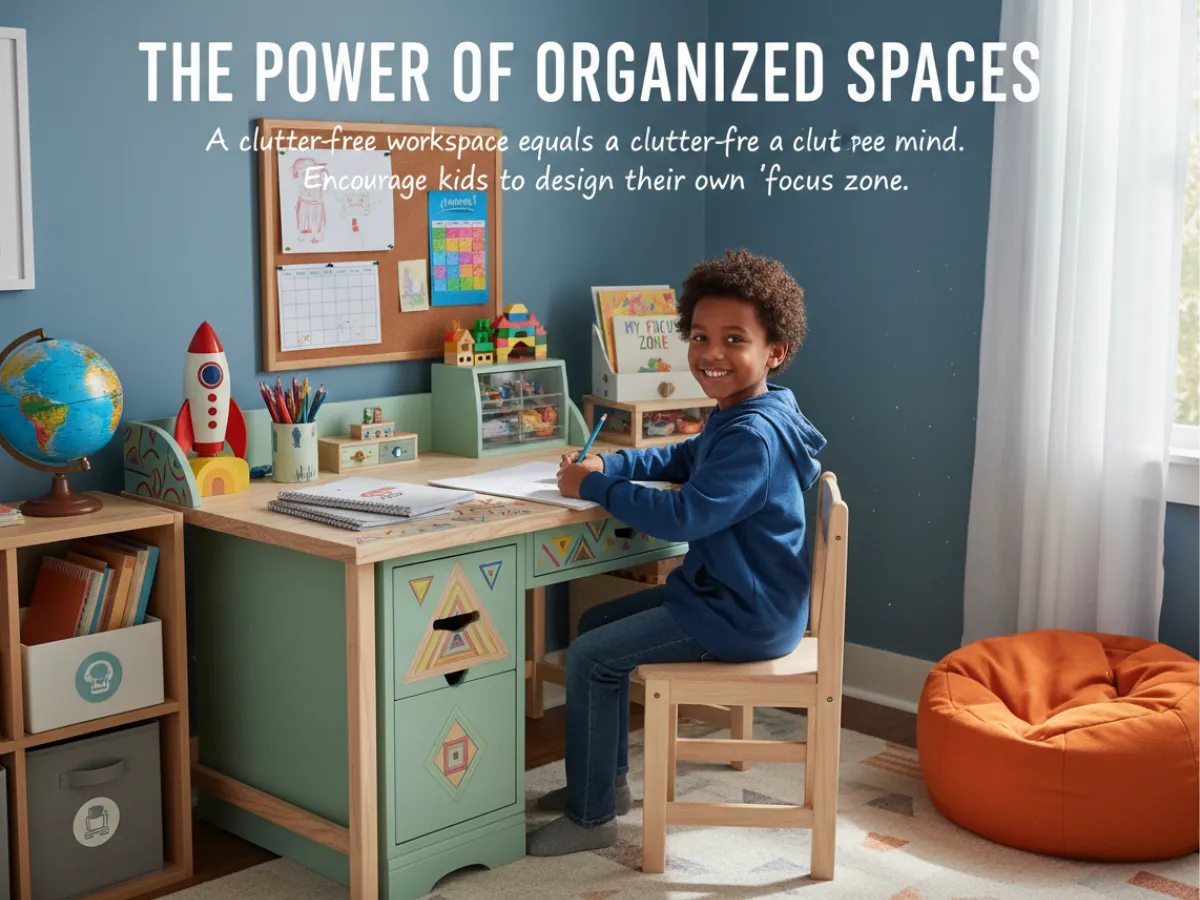
Enter the "Focus Zone:" like a mental superpower for kids, helping them shift from "play mode" to "school mode." Key ingredients are minimal distractions, a comfy spot, good light, and everything they need within reach. Empowering kids to design their own zones boosts independence and confidence.
Child development experts emphasize structured, clutter-free environments for improved attention, reduced stress, and enhanced academic performance. These spaces allow children to flourish academically and emotionally.
IV. The Great Debate: Is a Little Mess Actually... Genius?
Then we have the "Einstein Exception," that messy desk genius. What about the notion that alittledisorder can sparkmorecreativity (even if it was an adult study!)?
Embrace the productive "Messy Play." Finger paint, mud pies, and LEGO explosions are vital for sensory, motor, and cognitive development. The key is distinguishing between overwhelming clutter and the temporary, joyful "mess" of deep, creative play.
It's not about sterility, but intentional organization that allows both calm focus and bursts of creative chaos. Striking a balance becomes essential.
V. The Future is Tidy (and Techy, and Green!): What's Next for Our Spaces
The future holds classrooms with flexible, multi-use spaces, VR learning zones, AI-driven personalization, and a leap into outdoor learning and nature-infused designs (biophilic magic!).
The emerging fields of Neuroarchitecture and Salutogenic Design are literally designing spaces to make us healthier and smarter. Buildings could actively contribute to our well-being.
Imagine advanced, personalized, sensory-friendly "micro-learning hubs" and focus zones for all ages, preparing us for a hybrid, adaptable future. These spaces will cater to individual needs and promote continuous learning.
Key design innovations will include furniture that moves and adapts to you, smart acoustics to keep the peace, and the power of natural light and thoughtful color schemes to boost mood and focus. The integration of technology and thoughtful design will shape the future of our spaces.
VI. Conclusion: Time to Tidy Up Your Thoughts (and Your Space!)
Organized spaces have incredible power for mental clarity, productivity, and overall well-being.
Start small! Pick one area. Design a mini-focus zone for yourself, or empower your kids to create their own personalized study nook.
It's not about perfection, but about intention. Crafting spaces that serve your mind, nurture creativity, and support a happier, more focused life for you and your family.
© 2023 Zen Zones Blog. All rights reserved. Crafting clarity, one space at a time.
