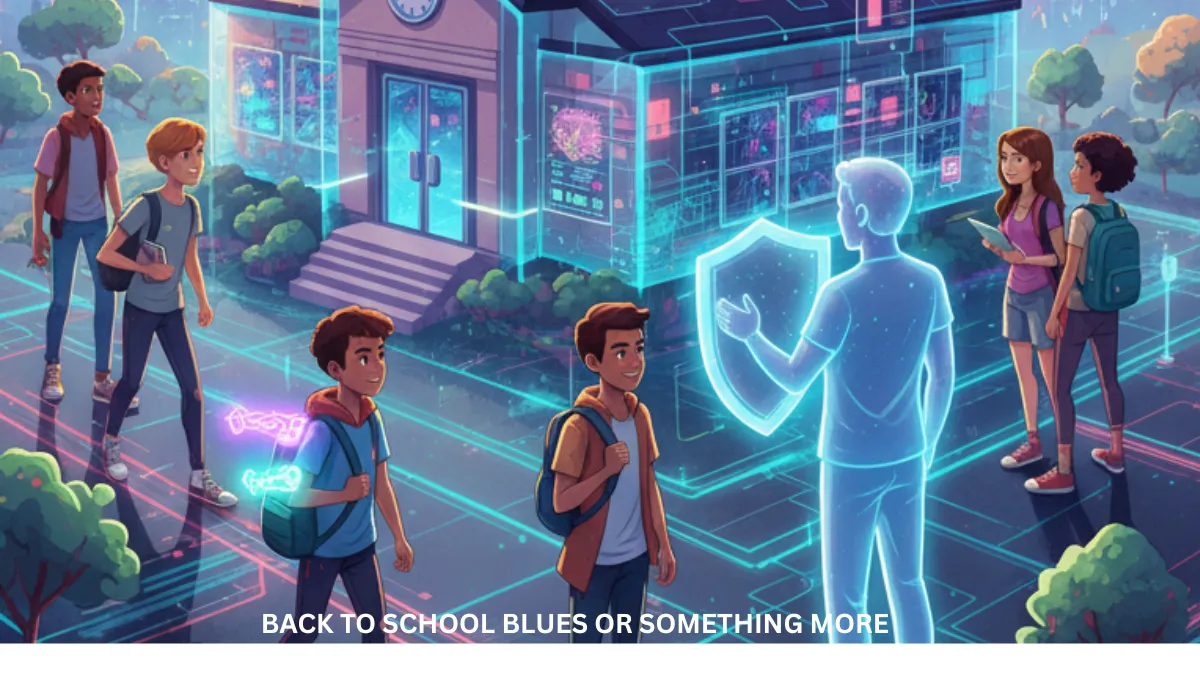
Back to School Blues or Something More? How to Be Your Teen’s Mental Health Hero This Academic Year

Back to School Blues or Something More? How to Be Your Teen's Mental Health Hero This Academic Year
The bell rings, backpacks are packed, and another school year begins. But for many teens, the return to routines isn't just about new classes; it's a doorway to immense mental health challenges. We're talking about more than just "teenage angst." Around 1 in 5 adolescents faces a mental health condition annually, with nearly half grappling with anxiety or depression. This guide will help you understand the pressures, spot the signs, and equip you with practical ways to support your teen through the academic year. The COVID-19 pandemic threw a wrench into adolescent well-being, and while some numbers are showing slight improvements, the underlying stressors are still very real, making parental support more crucial than ever.
Section 1: The Weight of Their World – Understanding Today’s Teen Mental Health Landscape
Let’s begin with the very essence of what we're discussing. What does mental healthactuallymean for a teenager, beyond the clinical definitions? It's not merely the absence of diagnosable illness, but rather the dynamic interplay of how they think, feel, behave, cope with the inevitable stressors, build relationships, and navigate the myriad choices life throws their way. It's the bedrock upon which their future is constructed, and we must treat it as such.
The statistics, frankly, are alarming. We can’t afford to politely ignore them. Consider this: roughly 20% of adolescents experience a diagnosable mental health condition each year. Peer a little deeper, and you’ll find that up to 40% of high school students report persistent feelings of sadness or hopelessness. When stress, anxiety, and depression stalk 30%, 22%, and 15% of our teens respectively, are we truly giving them the support they need? And the grimmest statistic of all: suicide remains a leading cause of death among our youth. These numbers aren't abstract; they represent real struggles, real pain, and real potential lost.
What fuels this quiet epidemic? Today's teens navigate a veritable minefield of stressors, many of which are unique to this generation. Theacademic pressure cookeris perhaps the most visible. The relentless pursuit of high grades, the agonizing anxiety of college admissions, and the pressure to excel in extracurricular activities create an environment where the joy of learning is often eclipsed by a gnawing sense of inadequacy. Expectations – whether real or perceived – from parents, teachers, and, perhaps most significantly, themselves, simmer constantly, threatening to boil over.
Then there’ssocial media's double-edged sword. The highlight reel, the relentless comparisons, the insidious nature of cyberbullying, the gnawing FOMO (Fear Of Missing Out) – it all contributes to a distorted sense of self and a relentless pressure to maintain a "perfect" online persona, chipping away at self-esteem and inner peace.
And let’s not forget the simple, yet profound, challenges of thesocial maze. Navigating friendships, grappling with peer pressure (which can sometimes lead down dangerous paths), dealing with social exclusion, and surviving the inevitable drama of relationships – these are all significant stressors in a teenager's life.
The relentless pace of modern life contributes too. Many teens areover-scheduled and under-rested, juggling too many extracurriculars with insufficient downtime, leading to burnout.
Finally, we cannot overlook the impact offamily dynamics and global woes. Home conflicts, major life changes within the family, and even the weight of global concerns like climate change and economic instability can weigh heavily on a young mind.
Section 2: A Look Back – How We Got Here: The Evolution of School-Based Mental Health Support
To truly understand where we are, it’s crucial to understand how we arrived. Consider the historical context, the evolution of how schools have approached (or, more accurately,notapproached) teen mental health.
In the“Pull Yourself Up by Your Bootstraps” Era(roughly the early 1900s to the 1970s), mental health was barely a blip on the radar. Schools primarily focused on physical health, with the appearance of school nurses marking an early, albeit limited, step. Mental health issues were often dismissed as mere "behavioral problems," with students often being directed to external clinics, further distancing the school from any sense of responsibility. A pivotal moment arrived with the Education for All Handicapped Children Act in 1975, which recognized students with "serious emotional disturbance," yet the necessary funding often lagged behind.
The1980s through the 2000switnessed a gradual awakening. There was a growing recognition that children needed mental health supportwithinthe school environment, not just referrals to outside resources. "Expanded School Mental Health" programs began to integrate community mental health efforts, aiming for a more holistic approach. Teachers began to be seen as "frontline" mental health workers, leading to calls for increased training.
Today's landscape, spanning from the2010s to the present, sees the rise of comprehensive, yet still challenged, approaches. Multi-tiered systems of support (MTSS) have become common, emphasizing prevention, early intervention, and treatment. Efforts to reduce stigma have increased, acknowledging the significant barrier it presents. The COVID-19 pandemic thrust mental health into the spotlight, significantly increasing demand for school services, with nearly 1 in 5 public school students utilizing them in 2024-2025. Technology, while a source of stress in some respects, also plays a dual role as a potential tool for support.
Section 3: The Big Debates – Why Supporting Teens is Still a Hot Topic
Despite these advancements, significant debates persist. Are schools truly equipped to be primary mental health providers? Critics voice concerns about potential over-diagnosis, misdiagnosis, and the dangers of "labeling" students without the necessary clinical expertise. The reality is that many schools, particularly those in rural areas, face chronic staff shortages and funding gaps, making comprehensive care a distant dream.
The very effectiveness of current programs is also under scrutiny. The value of universal programs like Social-Emotional Learning (SEL) is questioned, with some studies indicating limited or even negative results for certain interventions, potentially misallocating scarce resources. Critics point to an "incoherent" system, where services may not be well-targeted, benefiting those not in specific need while neglecting those with severe disorders.
Thestigma still lingers, casting a long shadow. Despite progress in raising awareness, the fear of judgment continues to deter teens from seeking help, even when services are readily available. Concerns about confidentiality are, sadly, very real.
Perhaps the most insidious challenge lies in theperception gap. Educators often point to social media and online bullying as primary culprits, while teens consistently identify schoolwork, homework, and grades as their biggest stressors. This disconnect means that well-intentioned support efforts might miss the mark entirely if they fail to align with the lived experiences and actual feelings of teenagers.
Section 4: Your Teen's Mental Health Toolkit – Expert & Parent-Approved Strategies for Home and School
Amidst these complex debates and challenges, what practical steps can be taken to support your teen? As a parent, you are thefirst line of defense.
Open communication is gold.Cultivate a judgment-free zone where your teen feels safe sharing their thoughts and feelings. Ask open-ended questions, actively listen without interruption, and validate their emotions, even if you don't fully understand them. Focus on connecting, not lecturing.
Foundational health hacks are crucial.Prioritize sleep (aim for 8-10 hours!), encourage healthy eating habits, and ensure daily physical activity. And, perhaps most importantly,modelthese healthy habits yourself.
Structure & organization can be surprisingly beneficial.Help your teen utilize calendars, planners, and break down large tasks into smaller, more manageable steps. Schedule regular check-ins to discuss deadlines and offer support, focusing not just on grades but on the overall workload.
Taming the tech beast is essential.Establish clear boundaries, monitor screen time (with your teen's knowledge and participation), and engage in discussions about digital literacy. Encourage real-world connections and activities.
Teach coping skills.Equip your teen with techniques like mindfulness, deep breathing exercises, and problem-solving strategies. Empower them to recognize when they need to ask for help. Consider allowing mental health days (when used constructively) as a way to reset and recharge.
Balance support with independence.Resist the urge to helicopter parent. Allow your teen to stumble sometimes, as this builds resilience.
Know the red flags.Be vigilant for changes in sleep patterns, eating habits, social withdrawal, declining grades, increased aggression or irritability, or, most critically, any talk of self-harm. Don't hesitate to act if you observe these signs.
Finally, and perhaps most importantly,your self-care matters. You cannot effectively pour from an empty cup. Prioritize your own mental and physical well-being, modeling healthy stress management techniques for your teen.
Schools also play a vital role, and there are key elements to look for.
Universal screeningcan identify students who need support before a crisis emerges.
Social-Emotional Learning (SEL)programs integrate empathy, self-awareness, and relationship skills into the curriculum.
Mindfulness & resilience programsequip teens with tools to manage stress in the moment.
Accessible servicesinclude on-site counselors, psychologists, and clear pathways to external resources.
Staff trainingensures that teachers and staff are equipped to recognize signs of distress and respond appropriately.
Asupportive environmentfosters anti-bullying campaigns, peer mentoring, and a culture where feeling "not okay" is not only accepted but validated.
Finally,academic accommodationssuch as IEPs or 504 plans can provide essential support for students facing anxiety or learning challenges.
Section 5: The Road Ahead – What's Next for Teen Mental Health Support?
Looking ahead, technology offers both promise and peril.AI chatbots and appslike Woebot and Wysa provide personalized support, coping strategies, and crisis connections.Telehealthbreaks down geographical barriers to professional therapy. Evenwearable technologyoffers the potential to monitor stress levels. However, we must proceed with caution, ensuring rigorous research on efficacy and promoting responsible digital literacy to mitigate the potential negative impacts of problematic tech use.
There's a growing push forintegrated systemsthat connect school, home, and community services, creating a comprehensive school mental health system (CSMHS). Efforts are underway to leverage Medicaid funding for school-based services and forge school-hospital partnerships for urgent care and specialized treatment.
Perhaps most critically, we needmore data and more voices. Better data collection is essential to truly understand what works, and young people must be actively involved in designing programs that resonate with their needs and experiences.
Closing theworkforce gaprequires increased federal, state, and local investments in hiring and training more mental health professionals to work in schools. And theongoing fight against stigmademands more open conversations, mental health awareness weeks, and even excused absences for mental health reasons, slowly chipping away at the shame that often prevents teens from seeking help.
Conclusion
Supporting teen mental health during the school year is a complex but vital mission. It requires a collaborative effort from parents, schools, and communities, addressing both ancient stressors and new digital challenges. You have the power to make a difference. By staying informed, fostering open communication, promoting healthy habits, and advocating for robust school support, you can help your teen navigate the academic year with greater resilience and well-being. Start the conversation. Be present. Seek help when needed. Together, we can create an environment where our teens not only survive the school year but truly thrive.
