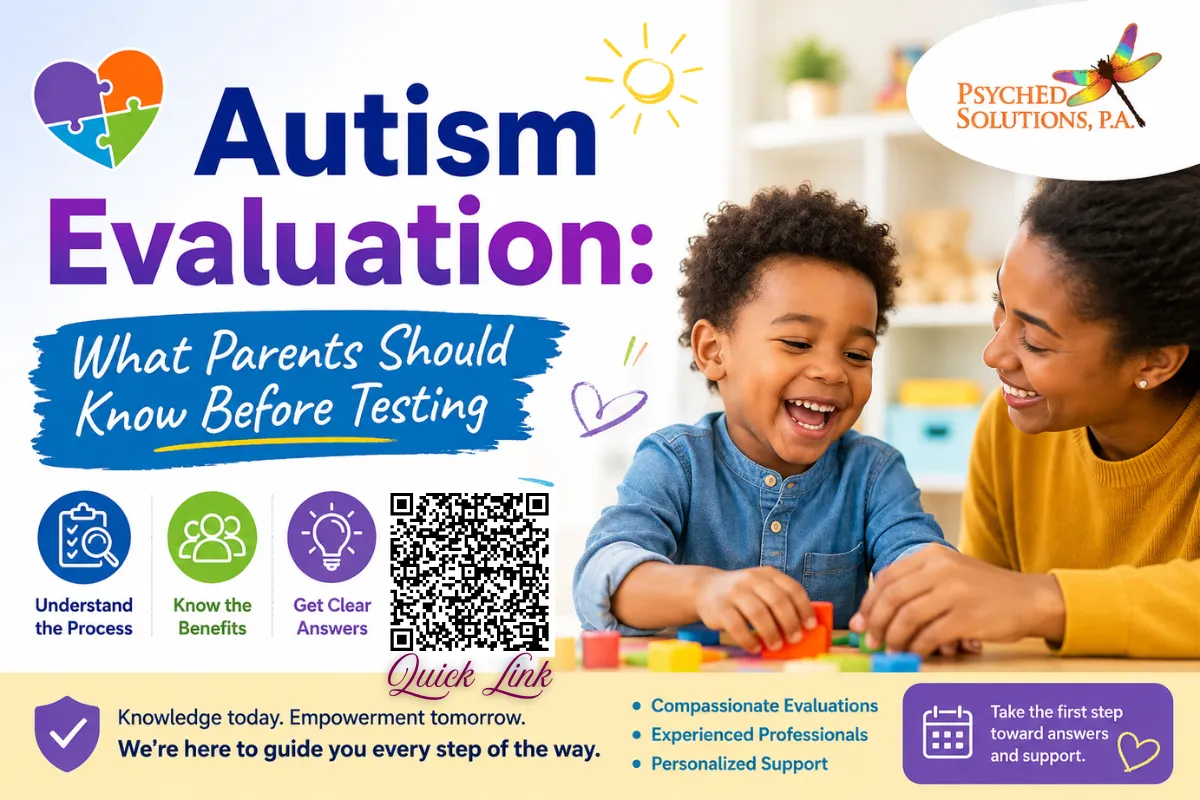
Autism Evaluation: What Parents Should Know Before Testing
Autism Evaluation: What Parents Should Know Before Testing
For many families, the decision to pursue an autism evaluation comes with a mixture of questions, concerns, and hope. Parents often spend months or even years wondering why certain areas of development, communication, behavior, or daily functioning seem more challenging for their child.
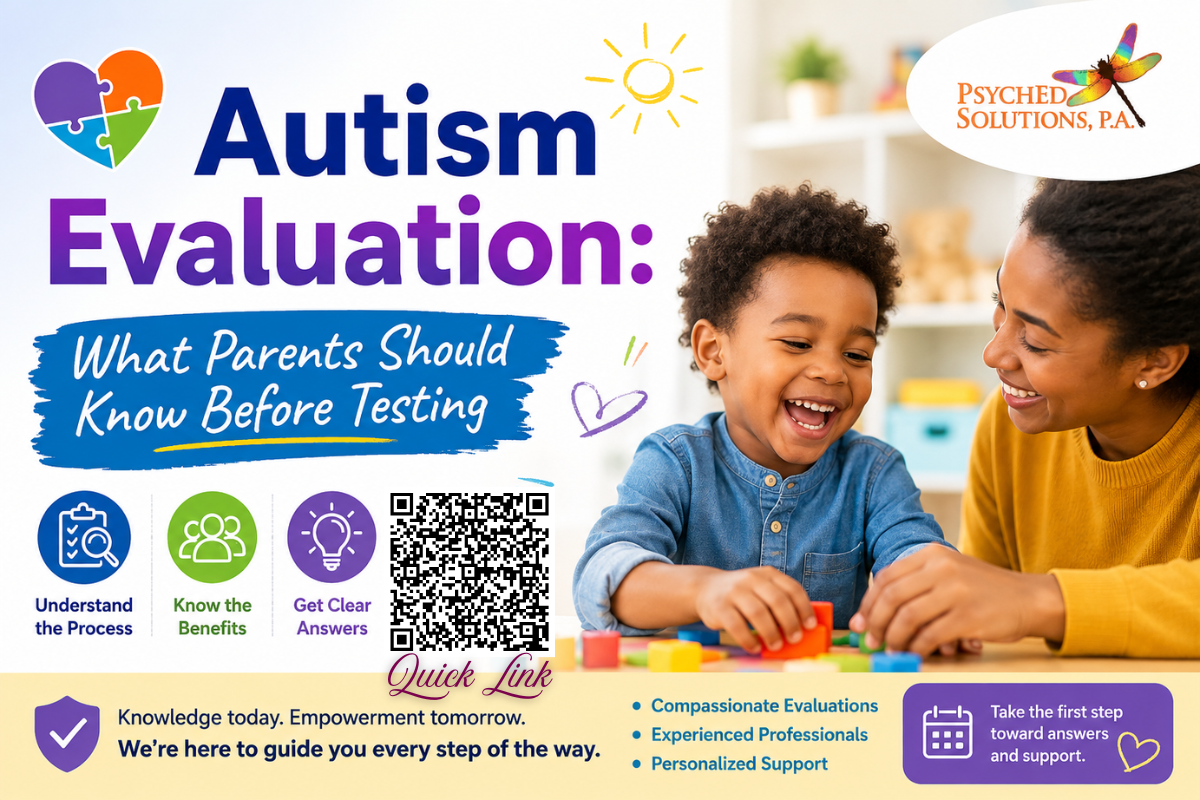
Seeking an autism evaluation is not about finding something “wrong” with a child. Instead, it is about gaining a better understanding of their unique strengths, needs, and learning style. A comprehensive evaluation can provide clarity, guidance, and access to the appropriate supports that help children thrive at home, in school, and in their communities.
Recognizing the Early Signs of Autism
Every child develops at their own pace, and differences in development do not always indicate autism. However, certain patterns may suggest that a professional evaluation could be beneficial.
Common signs that may warrant further evaluation include:
Social Communication Differences
Some children with autism may experience challenges with social communication, such as:
Limited eye contact or difficulty using gestures to communicate
Not consistently responding to their name
Difficulty engaging in back-and-forth conversations or social interactions
Challenges understanding social cues or maintaining peer relationships
Developmental Delays
Parents may notice differences in developmental milestones, including:
Delayed speech development
Limited use of words or communication skills
Difficulty expressing needs, emotions, or thoughts
Repetitive Behaviors and Need for Routine
Some children may display:
Repetitive movements such as hand-flapping, rocking, or other self-stimulatory behaviors
Strong preferences for routines and difficulty with unexpected changes
Intense interests or deep focus on specific topics or activities
Sensory Processing Differences
Children with autism may experience sensory differences, including:
Sensitivity to sounds, lights, textures, smells, or certain foods
Strong reactions to sensory experiences that others may not notice
Seeking certain sensory experiences for comfort or regulation
Recognizing these signs early allows families to move from uncertainty toward understanding and support.
The Importance of Professional Evaluation
Many parents hesitate to pursue testing because they worry that a diagnosis may create a limitation or label for their child. However, an autism evaluation is not about placing restrictions on a child’s future. It is about understanding how their brain processes information and identifying the tools and resources that can help them succeed.
A diagnosis can provide valuable insight into:
How a child learns and communicates
Their emotional and behavioral needs
Strategies that support independence and confidence
School-based accommodations and services
Without an accurate understanding of their needs, some children may spend years trying to adapt without the appropriate support. Some children may appear to function well at school but experience emotional exhaustion, stress, or difficulty managing emotions once they return home.
Understanding a child’s developmental profile allows parents, educators, and professionals to create a supportive environment where the child can grow while being accepted for who they are.
What Happens During an Autism Evaluation?
A comprehensive autism evaluation is a collaborative process designed to understand the whole child. The evaluation process may include:
Clinical Interview and Developmental History
A professional gathers information about:
Early development and milestones
Communication patterns
Social interactions
Behavioral concerns
Medical and educational history
Direct Observation and Assessment
The evaluator observes the child’s:
Communication style
Social engagement
Play skills
Behavioral patterns
Emotional responses
Standardized Assessment Tools
Validated assessment measures may be used to evaluate areas related to:
Autism characteristics
Social communication
Adaptive functioning
Developmental skills
Comprehensive Report and Recommendations
After the evaluation, families receive a detailed report explaining:
Evaluation findings
Areas of strength
Areas needing support
Practical recommendations for home and school
Recommendations may include strategies for parents, educational supports, behavioral interventions, and guidance regarding accommodations such as Individualized Education Programs (IEPs) or 504 Plans.
Understanding Your Child Beyond Behavior
A child’s behavior is often a form of communication. What may appear as defiance, avoidance, or emotional outbursts may be related to underlying challenges with communication, sensory processing, emotional regulation, anxiety, or developmental differences.
A comprehensive evaluation looks beyond the behavior itself and explores the factors influencing how a child experiences and responds to the world.
It is also important to be cautious about relying solely on social media content for self-diagnosis. Online information can help families recognize concerns, but autism is a complex developmental condition that requires a professional evaluation based on a child’s complete developmental history and individual presentation.
Early Understanding Creates Opportunities
If you have concerns about your child’s development, communication, behavior, or social interactions, seeking professional guidance can be an important first step.
Early identification and appropriate support can help children build confidence, strengthen skills, and develop strategies that support lifelong success.
Understanding your child is the first step toward helping them reach their full potential.
Important: This content is intended for educational and informational purposes only. It is not a substitute for a professional psychological evaluation, diagnosis, or treatment. If you have concerns about your child's development, learning, behavior, or emotional well-being, please seek guidance from a licensed healthcare or mental health professional.
Ready to Move From Questions to Clarity?
📞 Call (954) 257-7473
Schedule a professional autism evaluation or consultation to better understand your child’s unique needs.
Dr. Angela C. Brinson, Ph.D.
Licensed School Psychologist & Holistic Wellness Consultant
Specializing in Autism, ADHD, psychological evaluations, and emotional wellness support for children and families in Florida.
