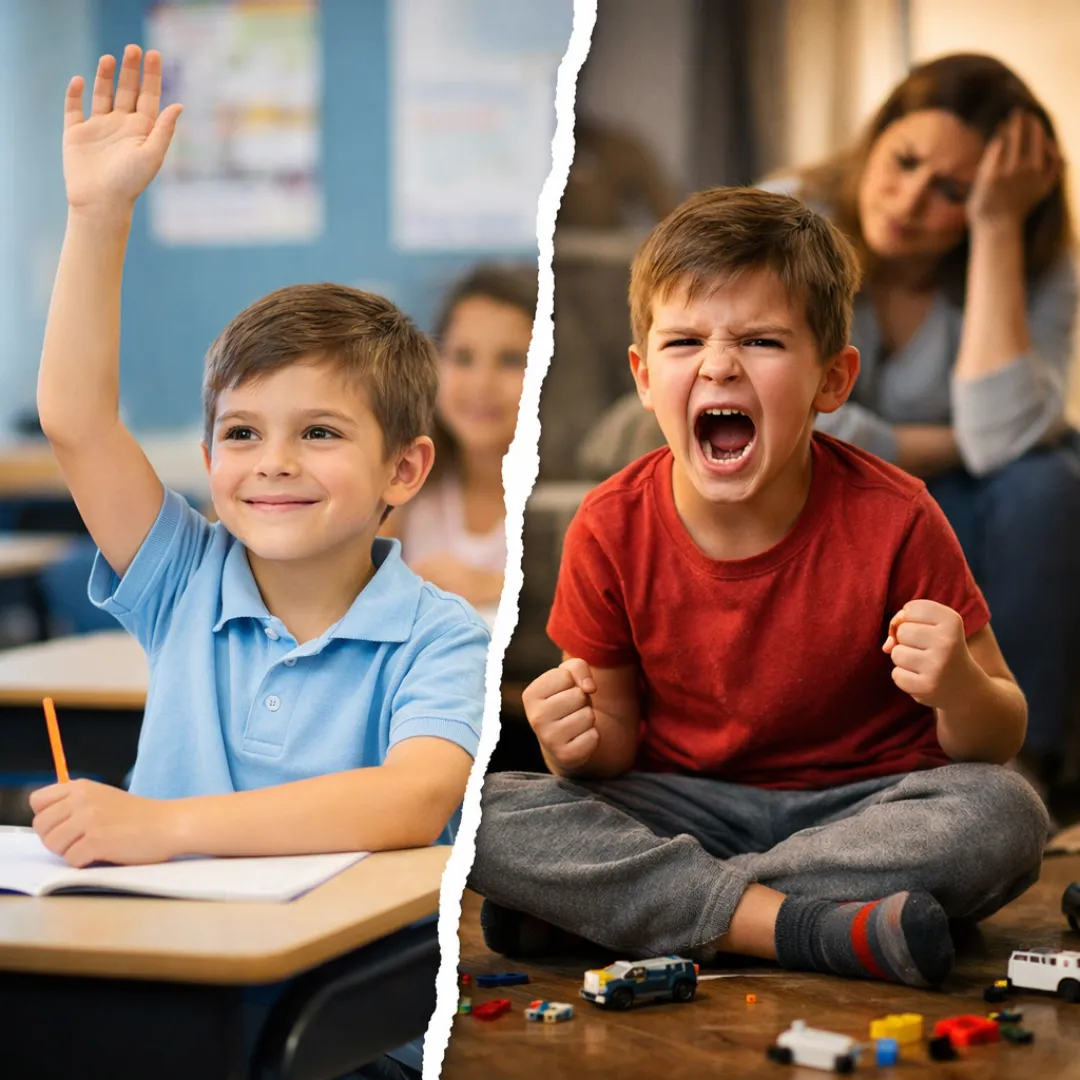
The “Angel at School, Storm at Home” Paradox: Why Children Hold It Together All Day and Melt Down at Home
The “Angel at School, Storm at Home” Paradox: A Guide for Frustrated Parents
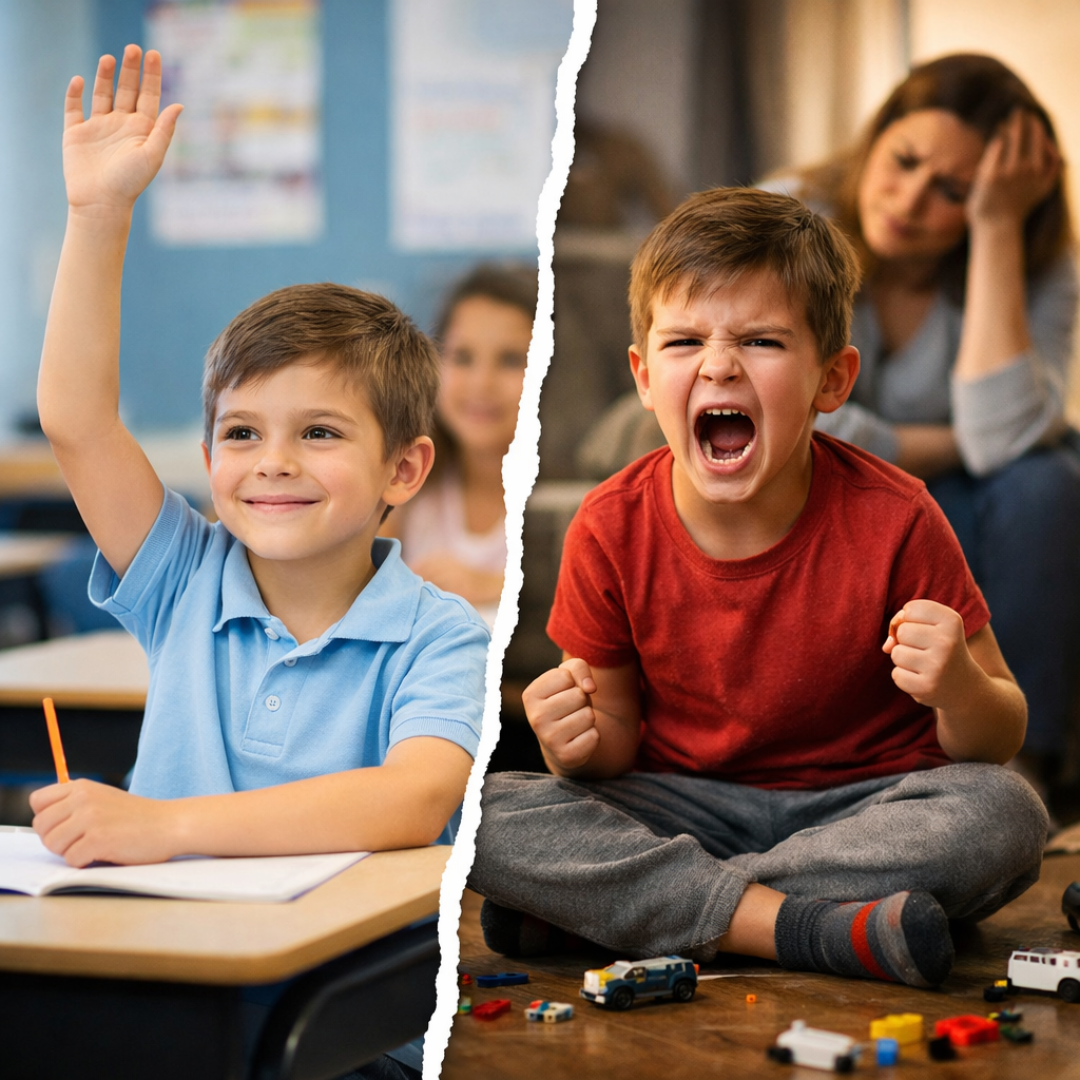
It is a scenario I have encountered countless times in over 25 years as a school psychologist: a parent sits in my office, visibly exhausted and confused, explaining the same pattern.
At school, their child is described as respectful, helpful, and attentive. Yet the moment they step through the front door at home, something shifts. The child becomes “unrecognizable”—prone to emotional outbursts, defiance, shutdowns, or intense reactions over seemingly small triggers.
If this sounds familiar, you are not alone. More importantly, it does not mean you are a “bad” parent. In many cases, it means your child feels safe enough at home to stop holding everything together.
The Exhaustion Behind the “Good Student Mask”
Many children—particularly those who are neurodivergent, anxious, or undiagnosed—spend their entire school day “masking.”
Masking is the effort of suppressing natural behaviors, managing sensory overload, and constantly adjusting social responses to meet expectations in the classroom. While it can help a child appear “well-behaved,” it comes at a significant emotional and neurological cost.
By the end of the school day, this constant self-regulation leads to complete emotional depletion. The child is no longer operating from a place of control—they are running on empty.
Home then becomes the only environment where the mask can come off. What looks like “behavior problems” is often the release of accumulated stress in the one place they feel emotionally safe.
The Science Behind After-School Emotional Outbursts
When a child holds it together all day at school but struggles at home, several interconnected factors may be involved:
Executive Function Fatigue
Children with ADHD or learning differences often rely heavily on executive functioning skills throughout the school day—attention, impulse control, organization, and emotional regulation.
By the time they get home, the prefrontal cortex (the brain’s regulation center) is fatigued, making it significantly harder to manage emotions or transitions.
Emotional Overload and Sensory Burnout
Classrooms are socially and sensory demanding environments. Even when a child appears calm, they may be processing constant noise, instructions, social cues, and expectations—all of which accumulate into cognitive overload.
Rejection Sensitivity
Some children experience heightened emotional sensitivity to perceived criticism or correction. At home, even neutral direction (“do your homework”) can feel emotionally intense, triggering disproportionate reactions.
Basic Physiological Needs
Often overlooked, hunger, dehydration, and lack of movement during the school day significantly reduce a child’s ability to regulate emotions after school.
Sleep and Stress Regulation
Poor or inconsistent sleep can elevate cortisol levels, leaving children in a heightened state of reactivity where small frustrations feel overwhelming.
Why Home Becomes the “Safe Explosion Zone”
A key concept for parents to understand is this: children often release emotions where they feel safest.
School requires control. Home allows release.
This means the emotional “storm” is not a sign of disconnection—it is often a sign of attachment. The child trusts that their caregiver will not abandon them when they are dysregulated.
However, without structure and support, this dynamic can become overwhelming for families.
The Role of Co-Regulation in Parenting
Children do not learn emotional regulation in isolation—they learn it through co-regulation with adults.
A regulated parent can help calm a dysregulated child. Conversely, when a parent is overwhelmed, stressed, or reactive, the child’s emotional state often escalates further.
Over time, some families may unknowingly fall into patterns of “emotional accommodation,” where all routines and boundaries are adjusted to prevent distress. While well-intentioned, this can increase long-term instability and parental burnout.
The goal is not to eliminate a child’s emotions—but to guide them through regulation while maintaining healthy structure.
Practical Strategies for a More Peaceful Home
1. Build a Decompression Routine
Avoid immediately addressing homework, behavior, or responsibilities after school. Instead, allow 20–30 minutes of quiet time, movement, or low-demand connection to help the nervous system transition.
2. Prioritize Connection Before Correction
When emotions are elevated, regulation must come before instruction. Simple grounding strategies—breathing together, quiet presence, or reduced verbal demands—can be more effective than immediate correction.
3. Strengthen the Foundations
Consistent sleep, balanced nutrition, hydration, and physical activity are not “basic needs”—they are core components of emotional regulation capacity.
4. Introduce Simple Communication Signals
For older children, establish a nonverbal cue or code word that signals overwhelm. This allows them to pause, step away, and self-regulate before escalation occurs.
Final Thoughts
When a child behaves differently at home than at school, it is rarely about “good” versus “bad” behavior. More often, it reflects emotional exhaustion, unmet regulation needs, or neurodevelopmental differences that require understanding rather than punishment.
Understanding this pattern is often the first step toward meaningful change. For many families, a comprehensive evaluation can provide clarity, direction, and a personalized plan forward.
If you are struggling to make sense of these patterns in your home, support is available.
📞 Call (954) 257-7473
👉 Message us for a holistic evaluation or consultation.
Disclaimer: This content is for educational purposes only and is not intended as a substitute for professional psychological, psychiatric, or medical advice, diagnosis, or treatment.
