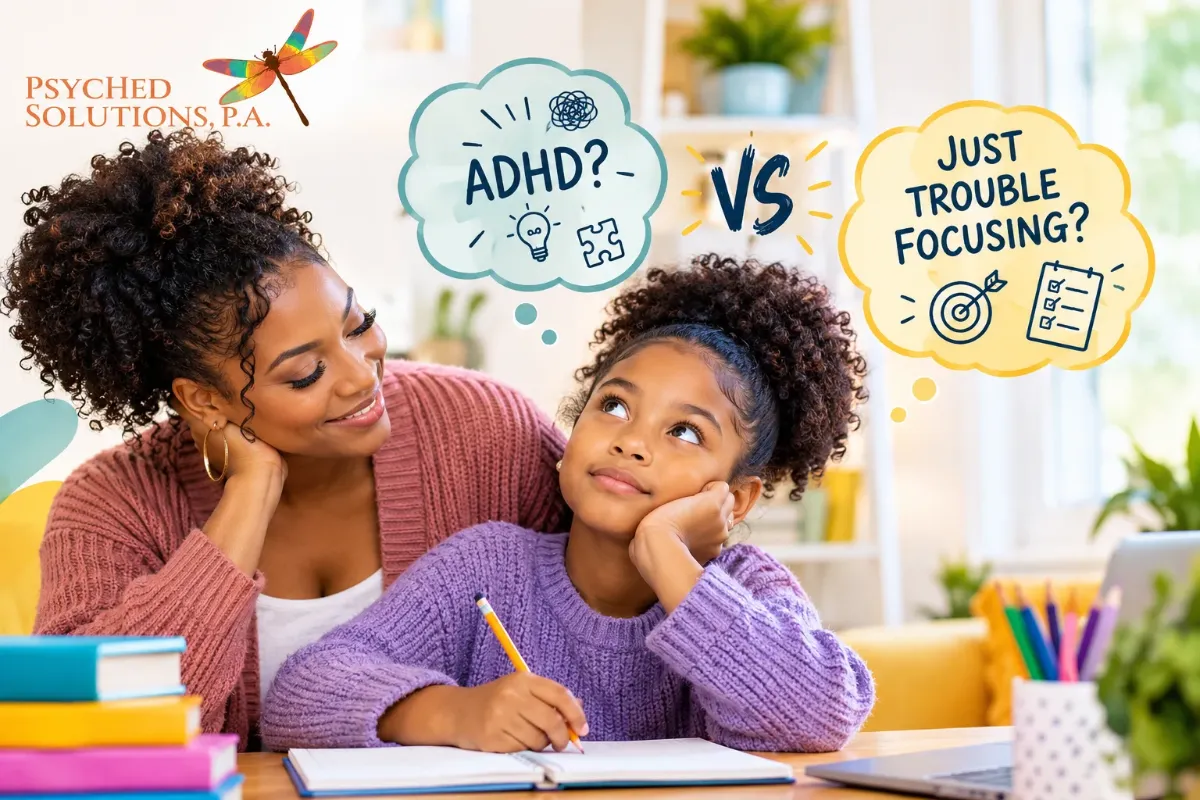
Is It ADHD or Trouble Focusing? Key Differences
Is It ADHD or Just Trouble Focusing? How to Tell the Difference
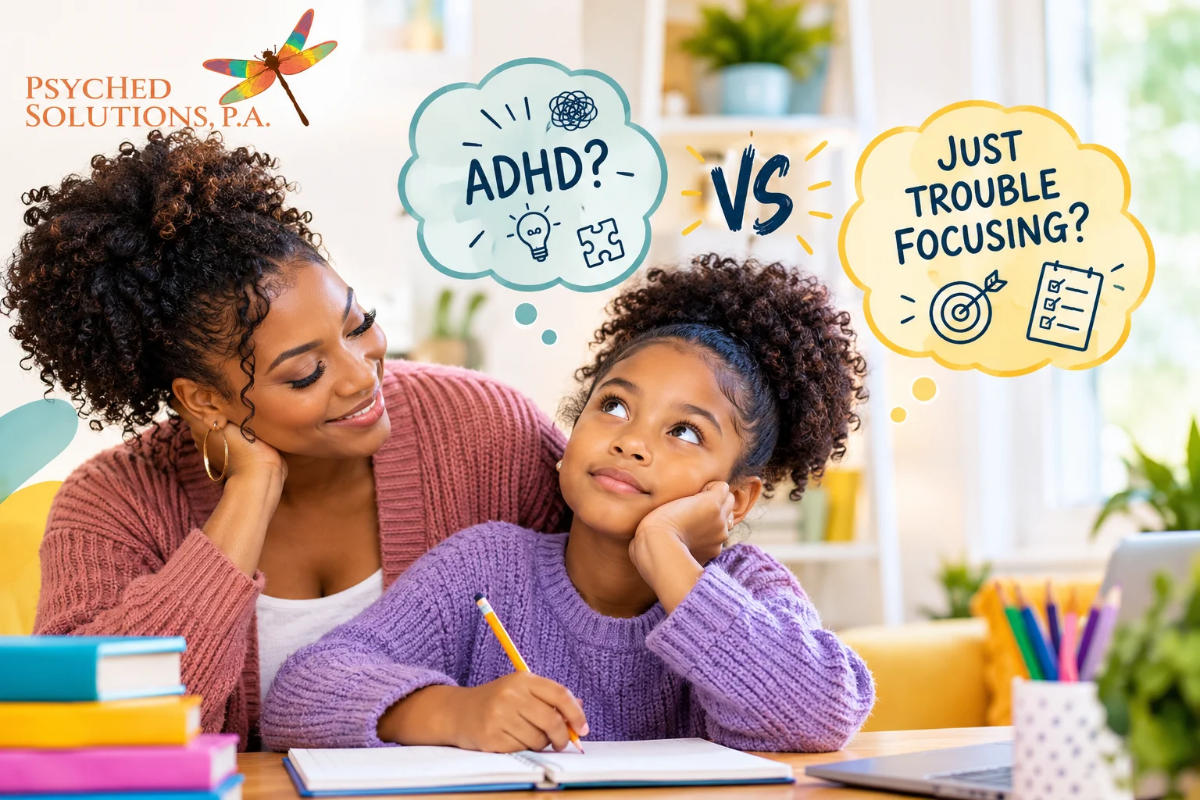
Difficulty concentrating is a common experience. You might lose track of a conversation, struggle to complete a tedious task, or find your mind wandering when you need to focus. In a world filled with digital distractions and social media discussions about mental health, it is understandable to wonder: Is this ADHD, or am I simply overwhelmed?
Although social media can increase awareness of mental health conditions, brief videos and online checklists rarely capture the complexity of a clinical diagnosis. Not everyone who struggles with attention has Attention-Deficit/Hyperactivity Disorder (ADHD). Everyday distractions, stress, sleep difficulties, anxiety, and other factors can affect concentration.
Understanding the difference between temporary attention difficulties and persistent symptoms of ADHD can help individuals and families determine when professional support may be beneficial.
1. Everyday Distractibility vs. ADHD
Attention is influenced by several factors, including motivation, sleep, stress, emotional well-being, and the surrounding environment. Temporary concentration difficulties may occur during periods of increased responsibility, emotional strain, or inadequate rest.
ADHD, however, is a neurodevelopmental condition associated with persistent patterns of inattention and/or hyperactivity and impulsivity. These symptoms can affect executive functioning—the mental processes involved in organizing tasks, managing time, regulating behavior, remembering instructions, and sustaining attention.
People with ADHD may experience difficulty completing routine tasks even when they understand their importance and genuinely want to finish them. These challenges are not simply a matter of motivation or willpower.
A key distinction is the persistence, developmental history, and functional impact of the symptoms. ADHD symptoms begin during childhood, although they may not be recognized until adolescence or adulthood. They must also occur in more than one setting and interfere with daily functioning.
2. How Sleep and Stress Affect Concentration
Before assuming that attention difficulties are related to ADHD, it is important to consider sleep quality, stress levels, and overall well-being.
Insufficient sleep can affect memory, attention, emotional regulation, and decision-making. Similarly, prolonged stress can make it more difficult to prioritize tasks, process information, and manage distractions.
When someone is experiencing significant stress or inadequate sleep, they may notice:
Difficulty remembering instructions or recently learned information
Trouble initiating or completing tasks
Increased irritability or emotional overwhelm
Reduced concentration during conversations or activities
Mental fatigue and difficulty organizing thoughts
These symptoms can resemble some features of ADHD. However, their presence alone does not establish a diagnosis.
Improving sleep habits, addressing stressors, and evaluating other contributing factors may improve concentration for some individuals. If difficulties persist despite these changes, a professional evaluation may help clarify the underlying causes.
It is also important to recognize that ADHD and sleep or stress-related difficulties can occur together. Improving one factor does not necessarily eliminate the others.
3. ADHD vs. Everyday Focus Challenges: Key Differences
Although individual experiences vary, the following comparison can help explain some important distinctions.
Feature | Everyday Focus Challenges | ADHD |
|---|---|---|
Developmental history | May begin during periods of stress, poor sleep, or significant life changes | Symptoms begin during childhood, even if identified later |
Consistency | Often fluctuates with circumstances and demands | Persistent pattern of symptoms over time |
Different settings | May be limited to specific situations | Symptoms affect multiple settings, such as home, school, or work |
Organization and time management | Difficulties may improve when circumstances change | Ongoing difficulties may affect planning, prioritizing, and completing tasks |
Impact on daily life | May cause temporary frustration or reduced productivity | Symptoms significantly interfere with functioning in academic, occupational, or social settings |
Some individuals with ADHD can concentrate intensely on activities that capture their interest while struggling with routine or less stimulating tasks. However, this experience—sometimes called hyperfocus—is not unique to ADHD and cannot independently establish a diagnosis.
Similarly, organizational difficulties, procrastination, and emotional frustration can occur for many reasons. The broader pattern of symptoms and their impact on daily functioning are more informative than any single behavior.
4. Why a Professional Evaluation Matters
ADHD can overlap with other conditions, and several concerns can produce similar symptoms. Anxiety, depression, trauma-related difficulties, sleep disorders, and learning differences may affect attention and executive functioning. Some individuals experience more than one condition simultaneously.
For this reason, self-diagnosis based on social media content or an online questionnaire is not a substitute for a comprehensive professional assessment.
Depending on the individual's needs, an evaluation may include:
1. Developmental and personal history
A clinician reviews the individual's developmental background, symptom history, academic or occupational experiences, and current concerns. For children, parent and teacher observations can provide valuable information.
2. Behavioral rating scales
Standardized questionnaires may help document symptoms and their frequency across different settings. These measures support the evaluation but do not independently confirm or rule out ADHD.
3. Assessment of attention and cognitive functioning
When clinically appropriate, psychological or neuropsychological measures may provide additional information about attention, memory, processing, and executive functioning. Computer-based attention tests may be included when indicated, but no single test can diagnose ADHD on its own.
4. Consideration of other contributing factors
A comprehensive assessment considers whether symptoms are better explained by another condition, reflect multiple co-occurring concerns, or require additional evaluation.
The purpose is not simply to assign a label. It is to develop a clearer understanding of the individual's strengths, challenges, and support needs.
5. Moving from Uncertainty to Clarity
Persistent concentration difficulties can affect academic progress, workplace performance, relationships, and confidence. When these challenges interfere with everyday life, seeking professional guidance can be a valuable next step.
An appropriate evaluation may help identify contributing factors, clarify whether ADHD or another condition is present, and guide individualized recommendations. Depending on the findings, support may include behavioral strategies, organizational tools, educational accommodations, therapy, medical consultation, or other appropriate interventions.
For parents, understanding a child's learning and attention needs can also help them advocate for appropriate educational support and make informed decisions about next steps.
The goal is not to rush toward a diagnosis or dismiss a concern. It is to understand the individual and identify the support that best meets their needs.
Find Clarity with PsychEd Solutions
Are attention difficulties affecting your child's learning, your daily responsibilities, or your overall well-being? You do not have to navigate these concerns alone.
PsychEd Solutions provides psychological evaluation and consultation services to help individuals and families better understand cognitive, behavioral, emotional, and learning needs.
📞 Call: (954) 257-7473
🌐 Website:https://florida.psychedsolutions.com/
Contact PsychEd Solutions to learn more about available evaluation services and discuss the next steps for your family.
Dr. Angela C. Brinson, Ph.D., is a Licensed School Psychologist and Holistic Wellness Consultant based in South Florida. PsychEd Solutions supports children, adolescents, adults, and families through psychological evaluation, educational guidance, and individualized consultation.
Disclaimer: This article is intended for educational purposes only and does not replace an individualized professional evaluation, diagnosis, or treatment recommendation.
